The Journey to Strategic Clarity: How Grantmakers Know When to Enter or Change a Funding Strategy
The Journey to Strategic Clarity:
How Grantmakers Know When to Enter or Change a Funding Strategy
Thursday, October 1 | Noon – 1:15 PM ET
How do grantmakers know when an issue is worth pursuing? When have we learned enough to begin investing? And how do we recognize when a strategy that once made sense needs to change or even come to an end?
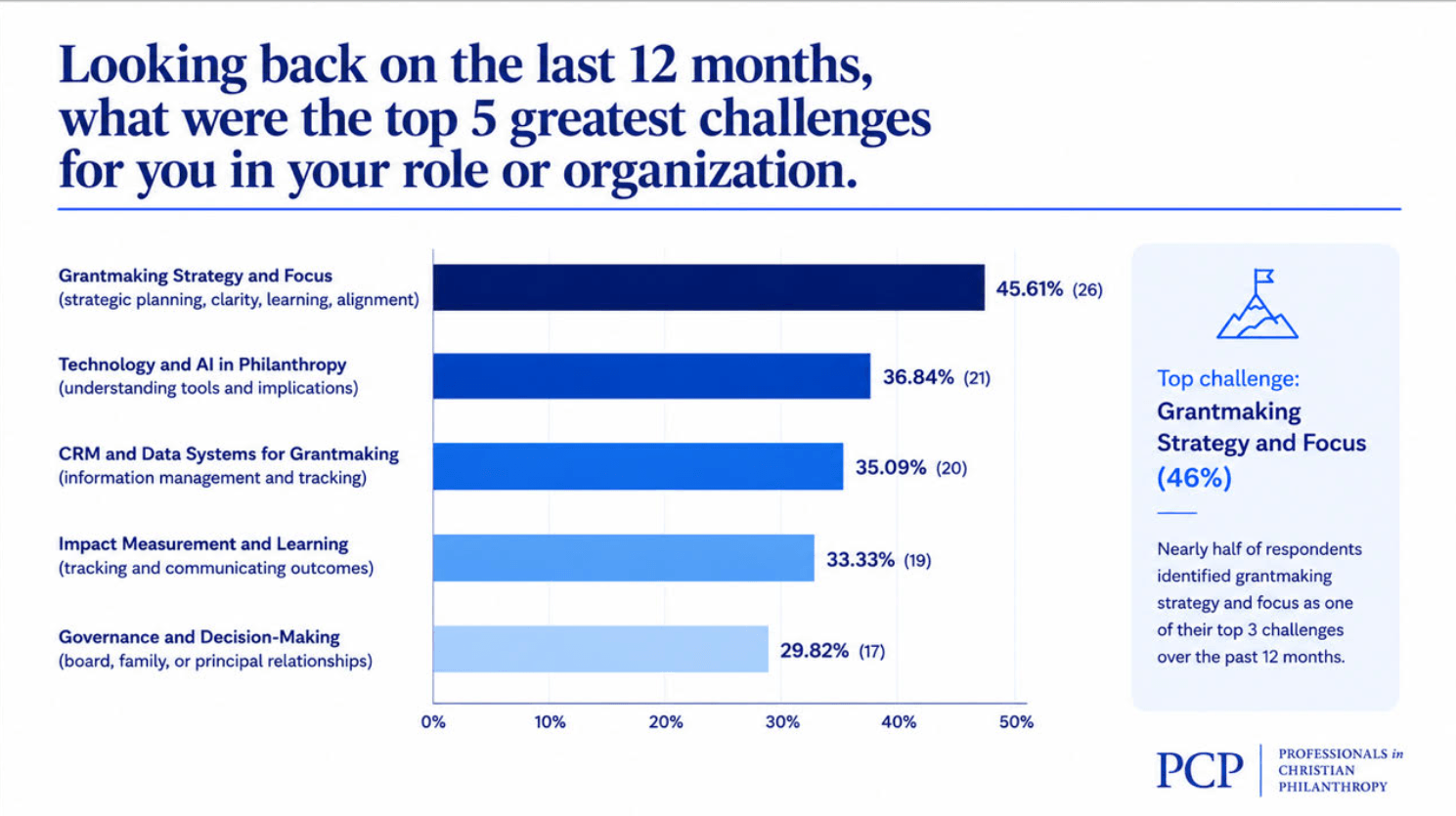
Grantmaking Strategy and Focus emerged as the most common challenge identified by participants in PCP’s member survey late last year (see the graph below). Strategic plans, theories of change, and other frameworks can help bring structure to a funder’s thinking, but they don’t necessarily answer some of the harder questions grantmakers face along the way: What do we need to understand before making a significant commitment? How do we know where we might contribute? And when does what we are learning suggest that it may be time to change direction?
This Learning Lab will explore that journey. Conversations about grantmaking strategy often focus on the question, “What is your strategy?” We’re interested in digging into a question that sits underneath it: “How did you know?" How did you know where to begin? What did you need to learn before committing significant resources? What assumptions changed along the way? And how did you know when it was time to move in a different direction?
David Hobbet, founder of Yesler Partners, will begin by offering several foundational questions that can help grantmakers think more clearly about strategy and discernment. He’ll help us think through questions such as: What kind of change are we seeking? Where within a larger system might we engage? Who else needs to be involved? And what unique role might we be positioned to play?
We’ll then move from frameworks to experience through two case studies representing very different moments in the life of a grantmaking strategy.
Anne Crossman of Pinetops Foundation and Thad Austin of EveryAge Foundation will share their experience of mapping a new area of engagement focused on the healing and well-being of pastors and healthier churches. Drawing on their work through Pinetops’ Project Levav and the Common Table Collaborative, they’ll explore how they sought to understand the landscape, learned from those already working within it, and developed enough clarity to begin investing.
Dana Doll of Micah 6:8 will explore the other side of the journey: knowing when it is time to move away from an existing strategy and toward something new. Dana will share Micah 6:8’s transition toward investing in African-led nonprofits, including what led to the shift, how they brought their board along, and how they navigated the difficult process of stepping away from longstanding funding relationships.
Through these stories and a facilitated conversation, we’ll explore the role of research, listening, relationships, experience, board engagement, and changing assumptions in shaping strategic decisions. Our goal is to help participants ask better questions and strengthen their own capacity to learn, adapt, and make wise decisions when the path forward is not immediately clear.
Whether you are entering a new area of funding, reconsidering an established approach, or simply seeking greater clarity about where your foundation can make its most meaningful contribution, this session will offer practical insight into the learning and discernment that often precede good strategy.
Presenters:
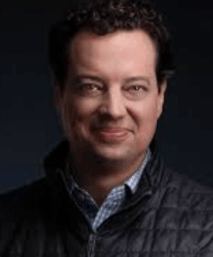
David Hobbet
Founder, Yesler Partners
David Hobbet is the founder of Yesler Partners, where he advises philanthropic and nonprofit leaders on strategy, organizational direction, and impact. Previously, David was an Associate Partner in McKinsey & Company’s social sector practice, leading strategy, program design, and organizational change efforts across philanthropy, higher education, and the public sector. He also served as Executive Director of The Veritas Forum, where he led the organization through a period of innovation and growth. David earned his MBA with honors from Northwestern University’s Kellogg School of Management and his bachelor’s degree in Political Science from Duke University.
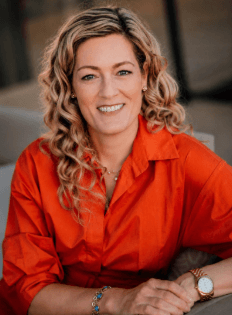
Anne Crossman
Board Member, Pinetops Foundation
Anne Crossman is a board member of Pinetops, a family foundation focused on catalytic giving and redemptive philanthropy. Her primary focus is the Levav Project—an initiative helping the Church respond to mental health, emotional maturity, and trauma across a spectrum of care that is theologically sound and clinically rigorous. Partnering with the team behind The Great Opportunity, Anne is leading the Levav Project to inform Pinetops' internal giving strategy and to resource the broader philanthropic community seeking to engage this space with clarity and care. Anne is a five-time published author and former educator, having attended Stanford and Duke. She lives with her family in Bend, Oregon
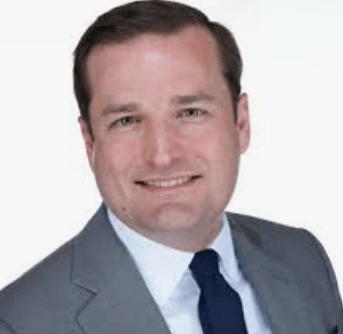
Thad Austin
Vice President, EveryAge Foundation
Rev. Dr. Thad Austin serves as Vice President of the EveryAge Foundation and Executive Director of the Common Table Collaborative. He has spent more than 15 years leading and advising congregations, denominations, and faith-based foundations, bringing experience across both ministry and philanthropy. An ordained pastor, Thad previously served congregations in Kentucky and Tennessee, including as Executive Pastor of a 3,200-member congregation. He earned his Ph.D. from the Lilly Family School of Philanthropy and is the author of Caring for Clergy: Understanding a Disconnected Network of Providers.
Dana Doll
Director, Micah 6:8 Foundation
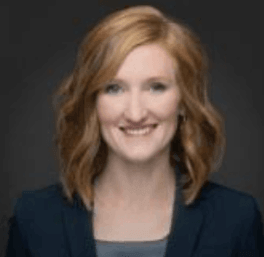
Dana Doll serves as Director of the Micah 6:8 Foundation, where she oversees the foundation’s philanthropic investments. Her work focuses particularly on building trusted relationships with visionary leaders in East Africa and connecting people across disciplines and borders to strengthen their impact. Prior to joining Micah 6:8, Dana co-founded and served as Executive Director of a nonprofit serving refugee women in West Michigan. Her experience as both a nonprofit leader and funder shapes her approach to philanthropy and her interest in building strong relationships with locally led organizations.
Our events are for our members.
We are a network of peers, and we are committed to cultivating spaces where trusted colleagues can learn with and from one another in community. If you are not a PCP member but like what you see here and would like to get involved, please learn more about us and our membership process here. We’re always delighted to welcome new members who fit our membership criteria and who will benefit from, and contribute to, our community.